


Road to Recovery
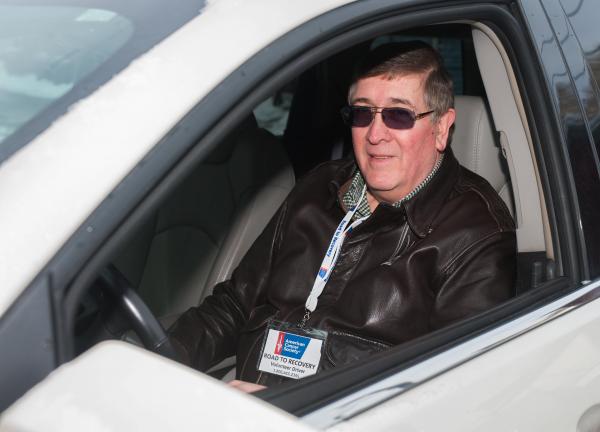 BOB FORD/TIMES NEWS
Every day thousands of cancer patients need a ride to treatment, but some may not have a family member or friend available to get them there.
Many of those cancer patients who need rides find them through the American Cancer Society Road to Recovery program, but according to Jennifer Washney, specialist mission delivery of the East Central Division of the American Cancer Society, many more drivers are needed to fill in some of the slots.
Washney said that more volunteers are needed so patients can receive the life saving treatments they need.
Washney said that the Road to Recovery drivers provide transportation to and from treatments for patients who do not have a ride or who are unable to drive themselves.
Road to Recovery drivers donate their time and use of their cars to people who need a ride.
The American Cancer Society has a volunteer network in which individuals can make a difference in the fight against cancer.
Not only do the drivers give patients a ride, they also provide encouragement and support.
For Bob Stevenson of Jim Thorpe, who joined the list of Road to Recovery drivers late last spring, he enjoys driving patients when his schedule allows the time.
"I joined the program last spring, and began driving over the summer," he said. "I get a call or an email saying the date or time and place where I can pick someone up," he said. "My first rider was someone who needed a ride from Jim Thorpe to Lehigh Valley."
Stevenson gave that patient a ride three times because he was able to work the assignment into his schedule.
Stevenson said that sometimes family members are available on certain days, so the patients use Road to Recovery drivers when their appointment schedule changes and the family member isn't available.
Occasionally, he has also been asked to drive patients in Schuylkill County and once took a patient from Barnsville to Danville.
"I usually drive someone about once a week," he said.
Stevenson said that he became a volunteer driver for the Road to Recovery project because of his late wife, Laura. It is his way of "giving back."
"I'm retired and Uncle Sam has given me a good retirement so that I am able to do what I do," said Stevenson.
Stevenson is a 40-year veteran of the United States Air Force.
"I am putting the word out that this is a good thing," he said. "It's not a case of have to, but want to."
Driver
requirements
Drivers for the Road to Recovery program must have a valid driver's license for the state in which they live. They must also have a safe, reliable vehicle and proof of automobile insurance. Volunteer drivers must have a good driving history and be in good health.
Drivers are usually called on to drive between 7 a.m. and 5 p.m., Monday through Friday. Volunteers donate the use of their car and the gas. They can keep track of their mileage and use it as a deduction on their income tax.
Before drivers can assist patients with rides, they are required to take a driver orientation class which lasts a half-hour to 45 minutes.
Driver coordinators help schedule the rides.
Volunteer coordinators also needed
Volunteer coordinator positions are also available.
Coordinators can work whenever it's convenient for them, one day a week, during the evening, or weekends.
Washney said that being a volunteer coordinator takes as little as four hours a week of your time, organization, and communication skills to make a major impact on the well-being of cancer patients in your community.
"Schedules are flexible," said Washney. "Our patients are so grateful. Many patients can't drive themselves and many of our patients count on drivers to take them for their treatments.
Washney said that radiation treatments may be scheduled for five days a week for several weeks.
"We're grateful to our drivers who do the best they can to help our patients," she said. "We do count on our volunteers to get people to their appointments."
Services offered
to patients
Washney said that in Carbon County last year the American Cancer Society provided 236 Carbon County patients with information or programs, provided services to 750 people and offered rides through the Road to Recovery program and assisted breast cancer patients with tools to have them feel better by providing make up and wigs through the Reach to Recovery program.
To learn about volunteer opportunities in your area with the Road to Recovery program, call 1-800-227-2345.


