


Locomotive moved to West Penn
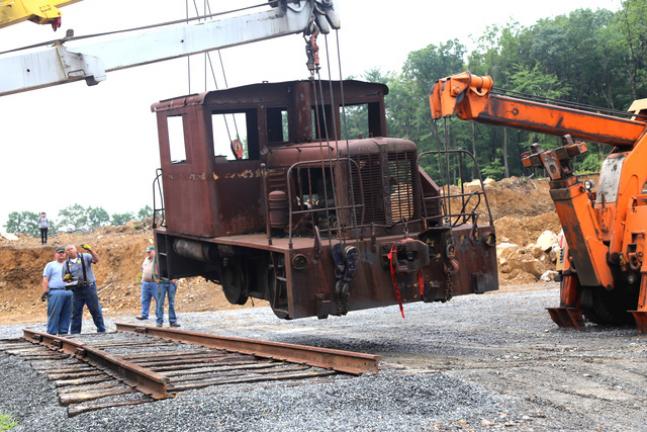
The Whitcomb engine is placed at its new home at the West Penn Township Municipal Building, 27 Municipal Road, New Ringgold as volunteers watch. DONALD R. SERFASS/SPECIAL TO THE TIMES NEWS
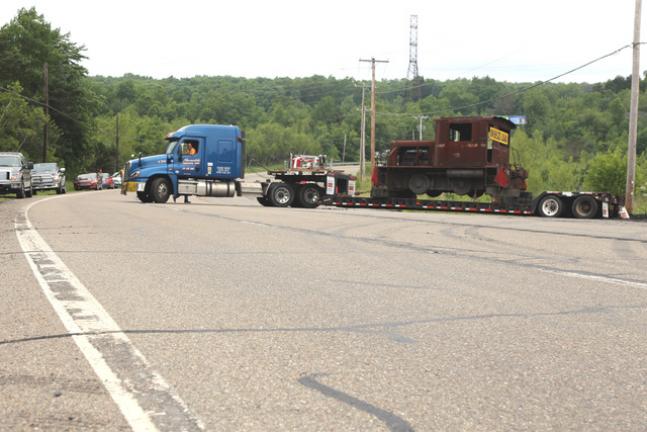
Traffic is stopped on four-lane Route 309 near McAdoo Saturday afternoon as a 45-ton train engine begins its 15-mile journey from Beaver Brook to New Ringgold. DONALD R. SERFASS/SPECIAL TO THE TIMES NEWS
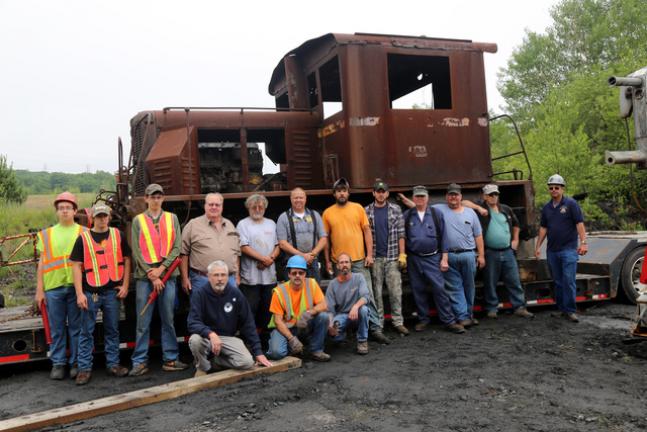
The men of the railroad relax near McAdoo on Saturday after hoisting a 45-ton Whitcomb diesel engine aboard a flatbed in preparation of moving the train to West Penn Township, five miles south of Tamaqua. DONALD R. SERFASS/SPECIAL TO THE TIMES NEWS
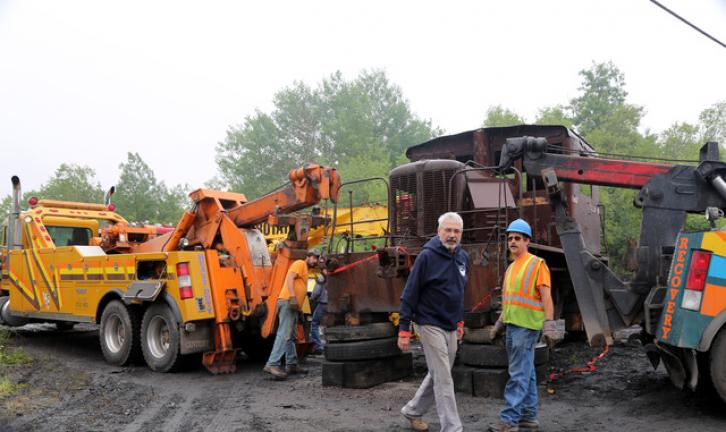
Matt Hope, center, on the work site with driver Art Sterling Jr. near McAdoo on Saturday as Dan Farber of Hope’s Collision and Towing checks the chains securing the 45-ton engine.
It was a 15-mile road trip Saturday from Route 309 at Beaver Brook to Municipal Road in New Ringgold.
But it was a task requiring months of planning, plenty of strategy and three hours of delicate execution. In fact, it challenged resources and tapped into a broad network of expertise by professionals in the trucking, hauling, towing and railroad industries.
The job was to move an abandoned 45-ton Whitcomb industrial locomotive near McAdoo to West Penn Township where it’s destined to become an attraction at township headquarters.
The 1940s-era diesel engine required an exacting extraction technique because it had sunk into mud and coal silt over the past three or four decades. Making matters worse was a morning rainstorm that turned the coal-land site into mud and muck.
“We probably have $1.7 million in equipment here today,” said Tony Prudenti, chairman of the board of supervisors.
Prudenti and township resident Dave Frederick came up with the idea for what became a yeoman project, necessitating 210 tons of pulling and hoisting power.
Major equipment
On hand were three heavy-duty tow trucks, two at 50 tons each and another at 35 tons. Added to that was a 75-ton rotator truck with a crane. The specialized equipment came from Hope’s Collision and Towing of Tamaqua, and Kisenwether Towing and Recovery of Drums.
“The important thing is to coordinate everything and get it accessible to load,” said Matt Hope as he went over strategy with towing operator Brian Kisenwether.
The project entailed use of cribbing and careful application of chains and hooks to lift the weight, keep it balanced and move it to a flatbed. Transport was provided by Horwith Trucking of Northampton, engineered by haul technician Art Sterling Jr. of Andreas.
“We could never afford all of this if we had to pay for it,” said Prudenti, who credited two other township supervisors, Tim Houser and Ted Bogosh, for embracing the idea.
“Ted came here and cleaned around the area so it can be moved out.”
Others, too, helped prep the site, including Matt Hope Jr. The project was a family affair for the Hope family as Tom Hope Jr. was one of the tow truck operators.
The project drew many onlookers who parked along Route 309, taking photos or shooting video.
Among them was Kermit Geary Jr. of Lehigh Gap.
“I’m with the Anthracite Railroad Historical Society, and I’m here to document it,” said Geary.
Others on hand included railroad mechanic Bill Frederickson of Hometown and son, Chad, a train engineer. Both are associated with the Reading Blue Mountain and Northern Railroad. Another rail fan checking out the job was Bob Malay of West Penn, retired conductor with Norfolk and Southern Railroad and former employee of Reading Railroad and Conrail.
Laying track
The engine was hauled to a West Penn site that had been prepared by volunteers several weeks ago. That group of men, many of whom helped again on Saturday, laid track, fastened iron rails and prepped ties at a highly visible hilltop site called the Ridge Cup, Route 309, five miles south of Tamaqua.
Volunteers say the area is a perfect spot to showcase the vintage locomotive previously used in anthracite coal mining because the township once hosted lines such as the Lehigh Valley Railroad and the Lehigh and New England.
The engine was donated to the township by Pagnotti Enterprises.
Prudenti and Frederick expressed gratitude to Pagnotti and all who volunteered. Frederick supplied baked refreshments to help keep energy levels high.
“The township is humbled by all of the help we’ve gotten,” Prudenti said.
He said a long-term goal would be to involve local youth groups, perhaps Scouts, to help refurbish the engine. Ultimately, the Whitcomb might anchor a West Penn Township welcome center after possible relocation of a train depot a few miles away.
The engine was placed on the tracks of its new home at 3 p.m., providing a strong visual story about the important role of railroads in rural West Penn and how anthracite helped to build a nation.


