


Are you cultivating invasive plants in your yard?
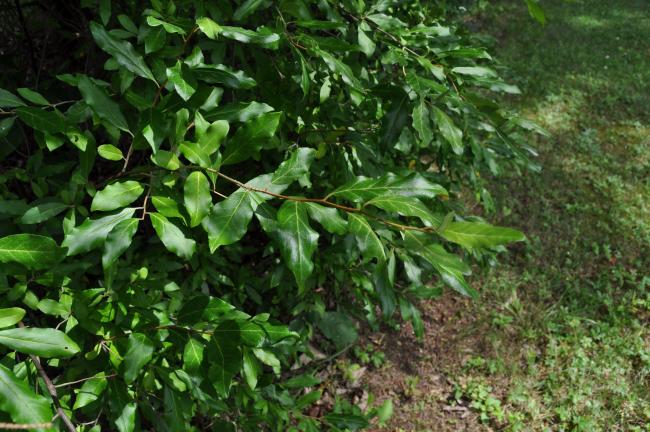 Russian olive is an invasive plant common in Pennsylvania.
What may seem like a lovely, colorful shrub that suddenly overcomes your backyard may actually be a destructive, invasive plant.
Invasive plants are identified by their ability to grow and spread aggressively, even in harsh conditions, making them detrimental to native species and the ecosystem as a whole.
Their ability to create monocultures is possible because they are free from natural restrictions in their native land, like parasites, diseases and herbivores.
These plants made their way to North America for a number of purposes, such as erosion control or simply for aesthetic reasons.
Some were carried here unintentionally by those traveling via land, air or water.
Invasive plants can even be spread within the United States by hikers, boaters or hunters who can carry seeds from one place to another on their shoes and clothing.
Some people intentionally plant an invasive species, not knowing that they spread quickly and require constant weeding to manage, even in a yard that is cultivated.
Wherever an invasive plant begins to grow, it is almost impossible to get rid of it.
Invasive plants can be trees, shrubs, grasses, vines or flowers. Those common in our area are bamboo, Janapese knot weed, butterfly bush, Russian olive, garlic-mustard and wild parsnip, among many others.
When plants overtake an area, they become a major factor in the decline of native plantlife.
Endangered, rare or threatened native species become especially vulnerable because they often live in very small populations, making it easy for invasive species to take over.
Some even degrade habitat for insects, birds and animals.
Maryann Serafini, a Penn State Master Gardener in Carbon County, has had issues with Japanese stiltgrass.
"The problem is that each blade of grass spews out hundreds of seeds," she said. "I have vacant lots across the street from my house and it's covered every year."
According to Serafini, the weed-preventer Preen can be put onto the plant in early spring, which prevents seeds from sprouting.
However, it is not an herbicide and will not kill the invasive species.
Hawk Mountain Sanctuary in Kempton is currently conducting research on the use of goats as a chemical-free alternative to removing Asian stiltgrass.
The study is part of a five-year conservation plan to control invasive species.
If you'd rather not buy a goat to graze your yard, the Department of Conservation and Natural Resources recommends a number of other ways to both prevent and kill invasive species.
First, minimize landscape disturbance and maintain healthy native plants. Non-native species thrive in areas where native plants have been displaced.
Try using organic, slow-decomposing compost and mulches to avoid giving an advantage to invasive plants, which have the ability to grow when soil has high levels of nutrients.
Effectively scout your property for invasives. The sooner they're found, the more controllable they are.
To remove them, mechanical digging or cutting is recommended, but large populations may need to be chemically eradicated by a professional.
Once you remove a non-native plant, be sure to replace it with a desirable species, or it is likely to grow back. They tend to thrive in unoccupied soil.


