


The effects of climate change on birds
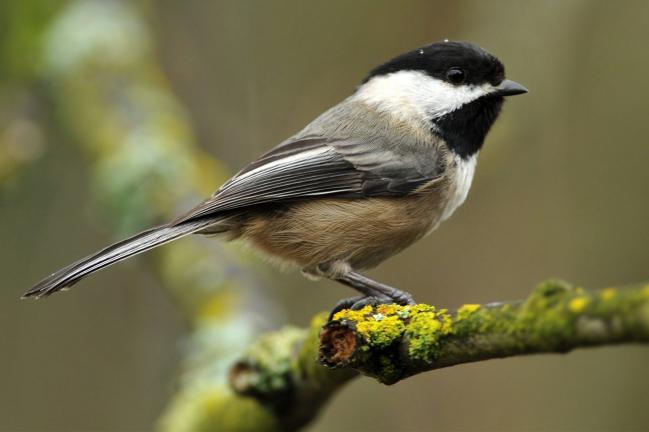 COURTESy PENN STATE MASTER GARDENERS A black capped chickadee
Black capped chickadees are familiar to all of us. They are a nonmigrating species, but they are more noticeable in winter when they arrive at our birdfeeders together with tufted titmice, nuthatches and juncos.
Black caps range from Pennsylvania northward to Canada and Alaska, and they are a quintessential woodland bird, eating seeds, berries, insects, and nesting in tree cavities made by woodpeckers or tree rot.
This cheeky little bird became the focus of a research project led by biology professor Robert Curry from Villanova University.
In the course of studying populations at Hawk Mountain, among other locations, he and his students began to notice that the black caps were moving their range northward, and the Carolina chickadee was moving in.
According to the Audubon Society, nearly 60 percent of the 305 nonmigrating bird species found in North American are shifting their ranges northward by an average of 35 miles.
This movement is powerful evidence that climate change is having a serious impact on natural systems.
Migrations of this sort put enormous pressures on the resources available to birds. They need nesting sites, food sources and clean water.
Plant migration doesn't necessarily keep pace with animal migration, and the food and shelter in a new territory may not be suitable for the newcomers.
On the other hand, native birds find themselves in fierce competition for nesting sites, and some species that fail to move on may be outcompeted by newcomers.
Migrating birds find themselves in trouble as well. Professor Scott McWilliams from the University of Rhode Island studies the changes that birds undergo in order to migrate. The bird's gut capacity has to change with environmental conditions, and this is a limiting factor in their ability to adapt to the rapidly changing climate.
In short, climate changes favor adaptable birds who can eat more food in colder climates and who can eat the food that is present when they arrive at a new location.
Since birds play a major role in controlling insects in the garden, you can do a lot as individual gardeners to help provide for birds displaced by rapid climate change.
You can increase the available nesting sites by building nesting boxes for cavity dwelling birds and planting an area of dense foliage with food bearing plants such as spicebush, elderberry, highbush blueberry, staghorn sumac (not tree of heaven), winterberry and viburnum. You can create a wildlife sanctuary on your property.
A wildlife garden can be in full view or tucked away behind trees that screen the habitat, yet provide a pleasant place to visit when the flowers are in bloom.
If you need to fence it in to keep the deer out, the fence won't show from the front of the property. Your wildlife garden room will have all that wildlife need to thrive: food, shelter, water, and a place to raise their young.
Penn State Extension publishes an excellent fact sheet called "Landscaping for Wildlife: Trees, Shrubs, and Vines". The fact sheet includes a list of plants that will provide food for birds all year round.
To download the fact sheet, go to: http://extension.psu.edu/natural-resources/wildlife/landscaping-for-wildlife/pa-wildlife-7.
For more information, contact the Penn State Master Gardeners at Carbon County. The green line is open Tuesday mornings from March through October at 570-325-2788 or CarbonExt@psu.edu.
The office is at Penn State Extension, 529 Lentz Trail, Jim Thorpe, PA 18229.


